
★★★★ ★★ 4.25/5
Rao Bahadur review: a gloriously strange triumph
A dying aristocrat stays alive on pure suspicion. Venkatesh Maha's wildly original psychological drama, with Satya Dev at a career peak. 4.25/5.
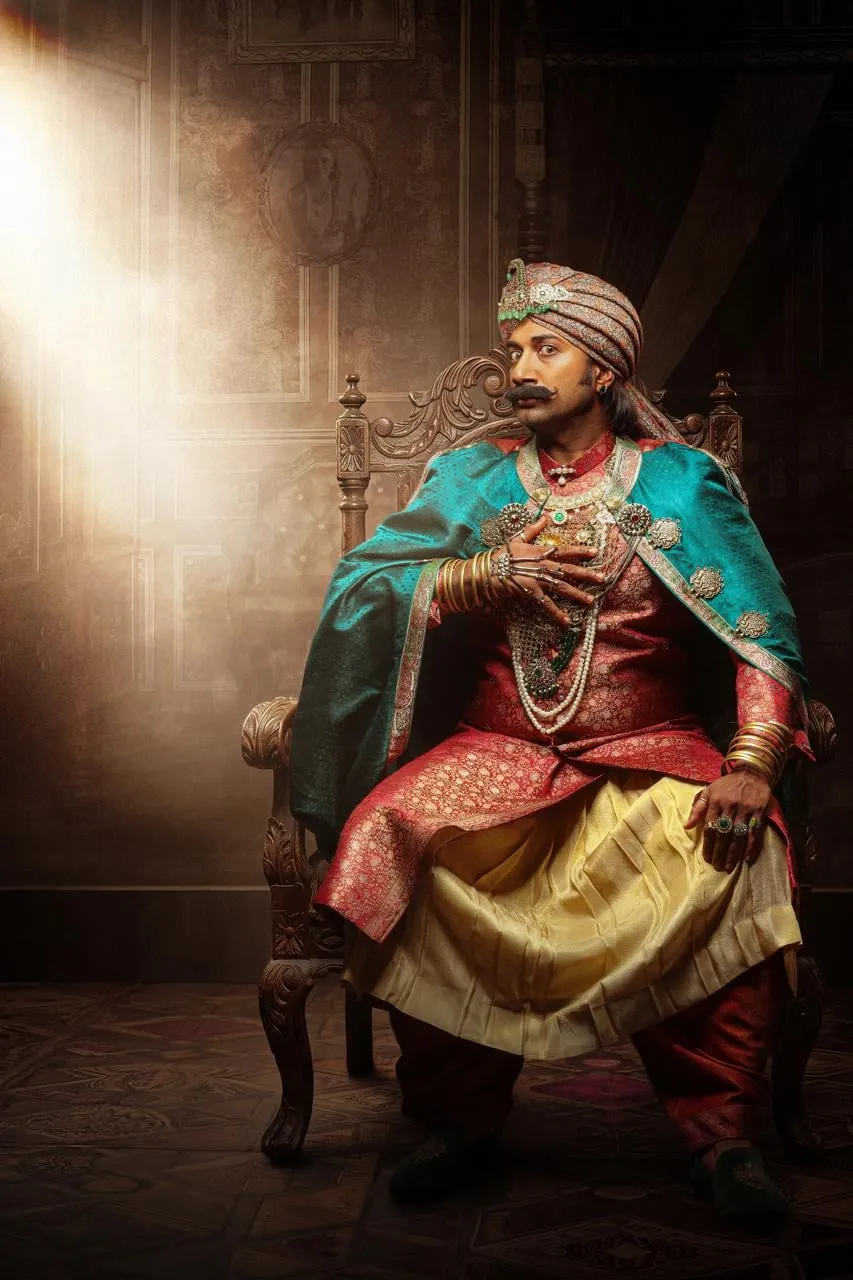
Doctors give Bhuvanam Ramappa Rao Bahadur (Satya Dev) four months to live. He hangs on for years, and it isn’t medicine doing the work. What keeps him breathing is a question he cannot put down: is his second son really his? A man kept alive by suspicion the way other men are kept alive by hope. That is the idea Venkatesh Maha, of C/o Kancharapalem fame, builds his third feature around, and he shapes it into the most original thing to hit Telugu screens in years.
Set between 1968 and 1991, almost entirely inside one fading mansion, the film watches Ramappa curdle in aristocratic splendour. His wife Renuka (Deepa Thomas) shut herself in a dark room long ago and never came out. His friend and family doctor Achari (Vikas Muppala) shuttles between the two, trying to treat an illness no stethoscope can find. Around this triangle, Maha stages something closer to theatre than cinema: long unblinking takes, fourth-wall breaks, musical numbers that behave like a Greek chorus, and a protagonist who lectures Mahatma Gandhi and cross-examines the Pandavas on their legitimacy, sometimes before lunch.
If that sounds indulgent, it occasionally is. But the craft is so assured you mostly don’t mind. Kartik Parmar’s symmetrical, storybook frames have already drawn Wes Anderson comparisons, and Rohan Singh’s production design makes a single location feel inexhaustible. Smaran Sai’s score does serious heavy lifting, swelling under scenes that would read as inert on paper and giving the whole thing the texture of a fever dream you can hum.

A man interrogating his own reflection, which is where most of this movie actually takes place.
Satya Dev, whose Zebra travelled well beyond Telugu, is the engine here. He plays Ramappa across three decades, from a young idealist who mocks lineage and caste to the very patriarch he once laughed at, and the change is frightening precisely because the film shows how ordinary it is. There are stretches where you stop seeing the actor entirely. Vikas Muppala matches him beat for beat, Bala Parasar’s deadpan maid supplies the best dark laughs, and Anand Bharathi’s inspector strolls in late and jolts the final act awake.
The flaws are real. The first half doesn’t build its mystery so much as postpone it, hoarding nearly every revelation for after the interval, so you spend long stretches waiting for the film to hand you something to hold. Renuka, introduced as the sharpest person in any room, thins into a plot device by the end. One song sequence could go entirely. At 169 minutes, a leaner cut was available.
And yet the last half hour lands everything: the twists, the satire, and a genuinely moving argument that what you pass on matters more than what you pass down. Telugu cinema rarely swings this hard at something this strange; the last release that felt this untethered to formula was Balan - The Boy, and that was Malayalam. Go in patient, phone off. 4.25/5.
More onRao Bahadur,Satya Dev,Venkatesh Maha,Movie Review