★★★ ★★ ★ 3.75/5
Baththa review: a gangster comedy with a tender heart
A schoolboy accidentally locks a feared 1980s rowdy in a toilet, and Vijay Sethupathi and Sai Prithvi Raj spin it into something funny and moving.
The children of Baththa’s neighbourhood swear he keeps a lion on his terrace and once broke his way out of a police station. The person who finally puts him away is a third-standard boy, by accident, with a door bolt. Balaji Tharaneetharan builds his first film in eight years on that one absurd image, and turns it into a funny, moving story about what a week behind a locked door does to a man who has never had to sit still.
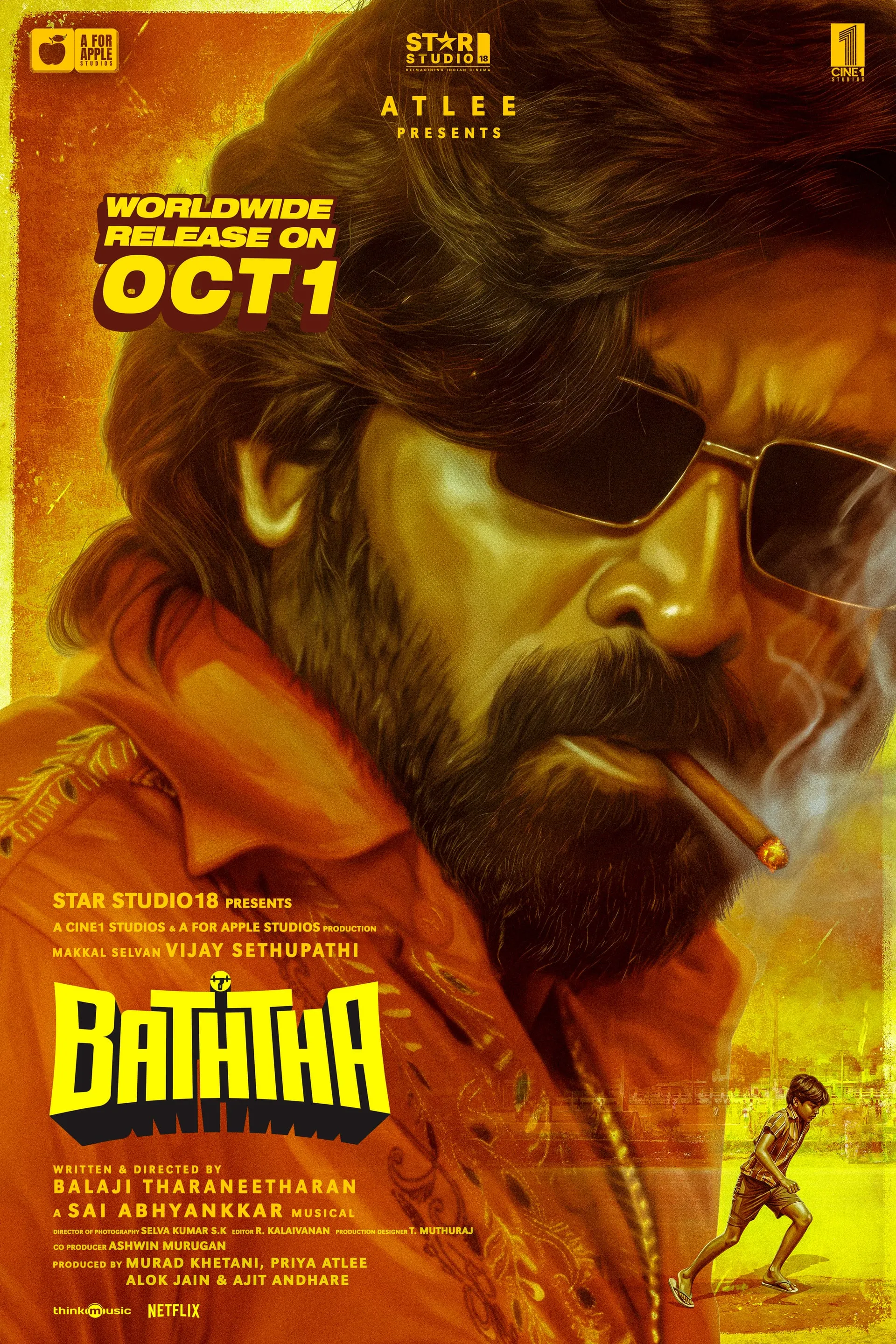
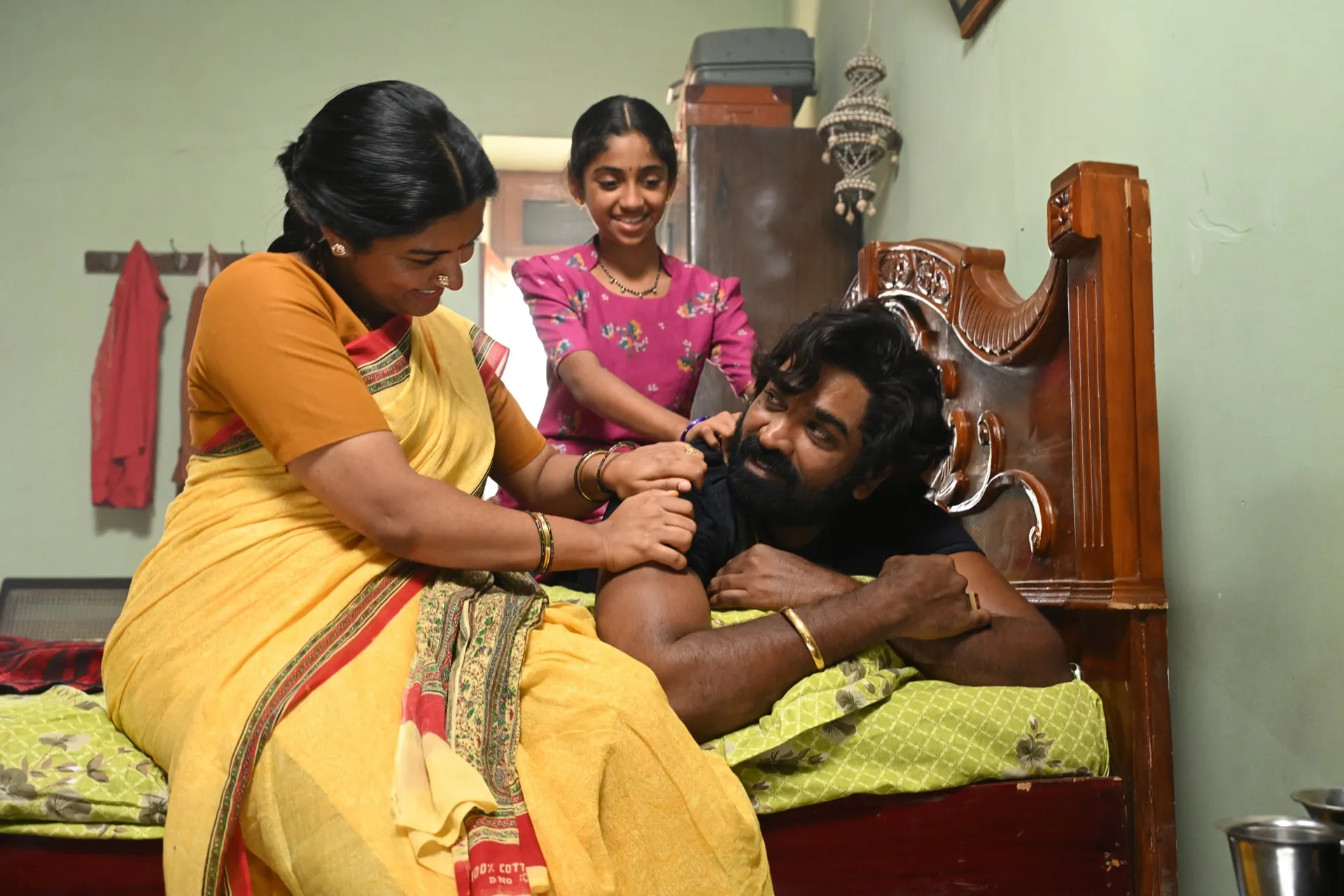
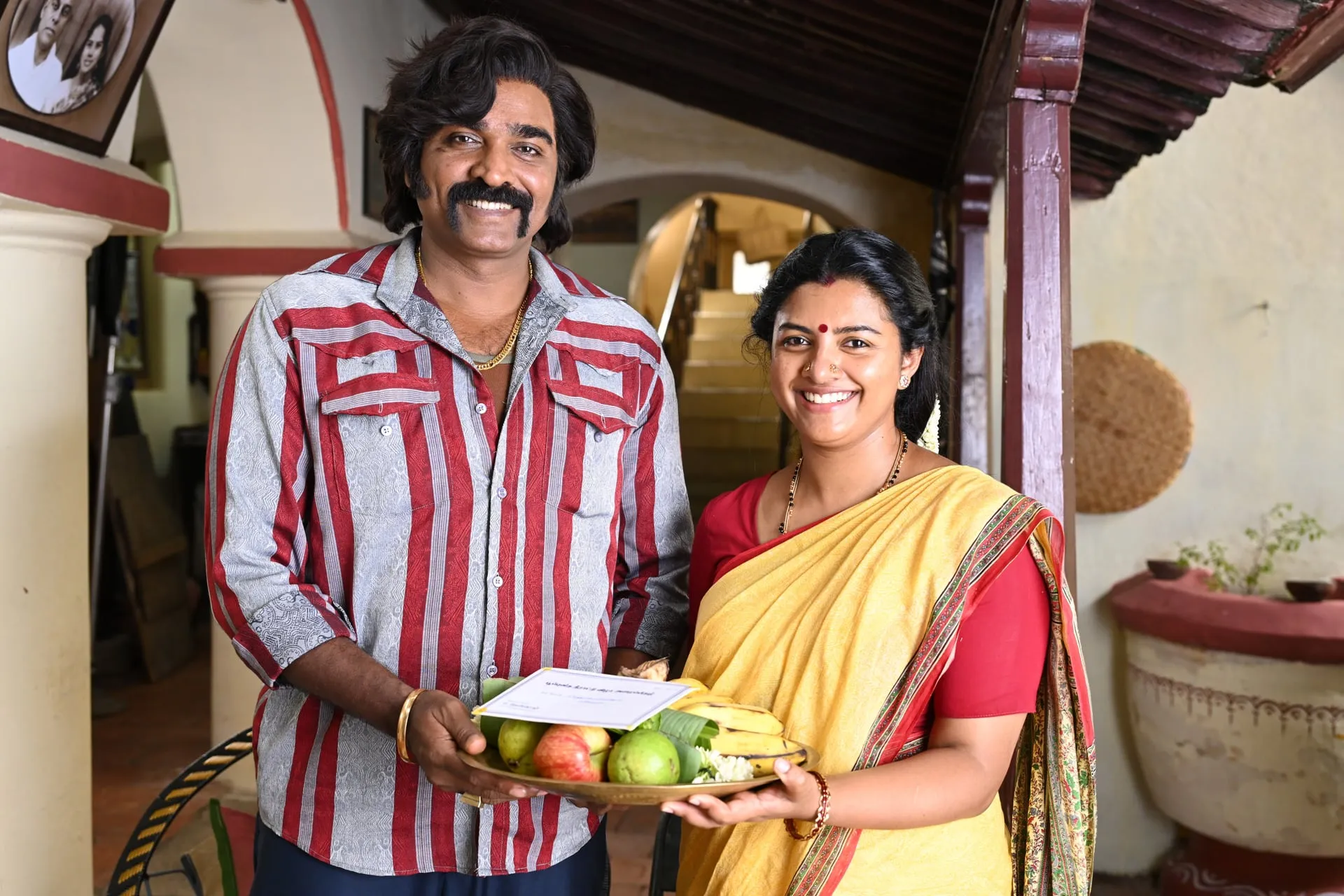
Baththa (Vijay Sethupathi) is the full 1986 Madras rowdy: loud shirts, a gold chain and a moustache that does half the intimidating. He batters a rival (Arjun Chidambaram) in the market while the man’s family pleads, spits out the food his wife Kannima (Lijomol Jose) cooks, and slaps her when the mood takes him. Sabari (Sai Prithvi Raj), timid and very small, sneaks into his deserted school during the holidays to recover a confiscated toy, bolts a toilet door without knowing who is inside, and then cannot bring himself to open it again.
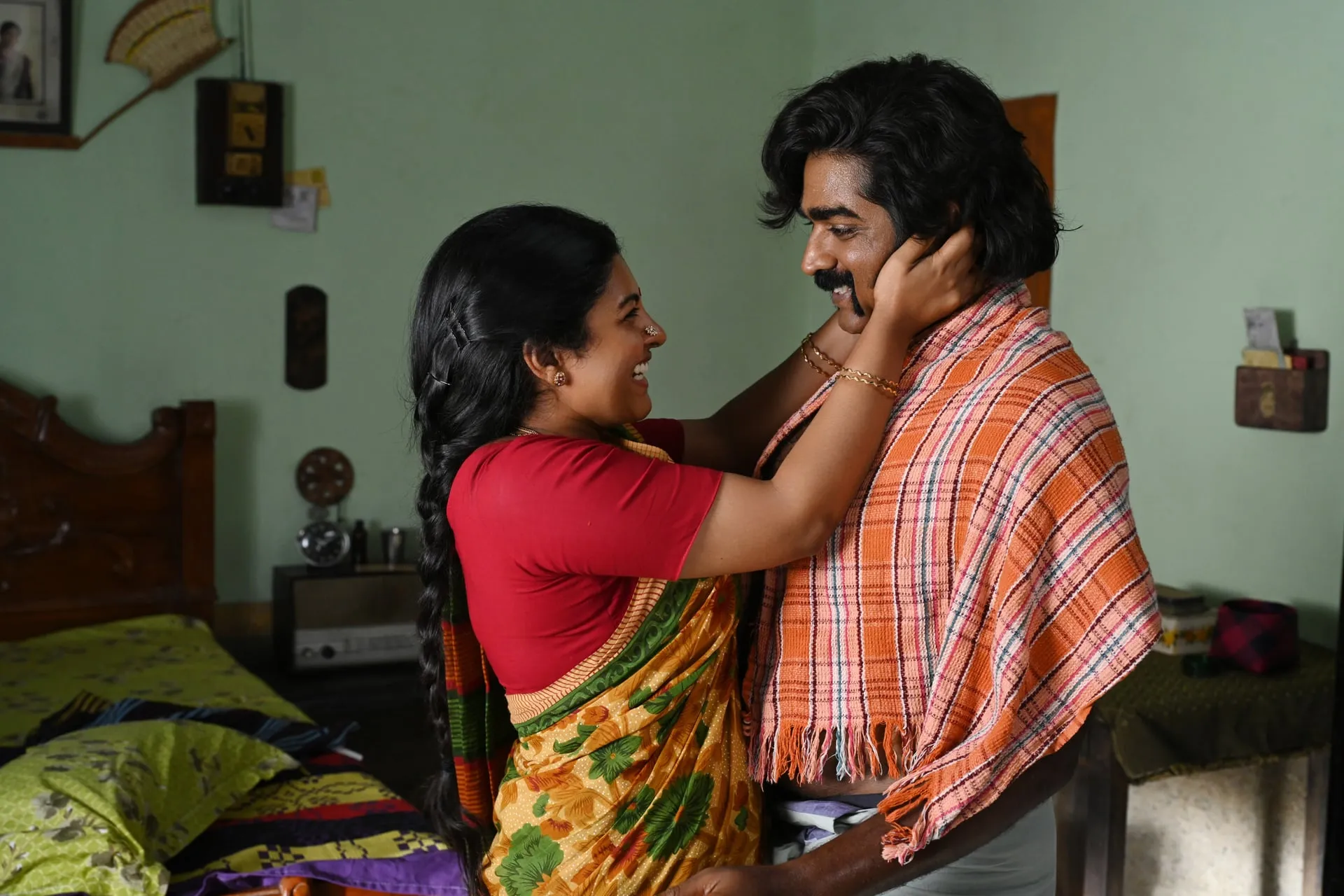
Balaji’s great skill is patience. A snake, a packet of rusk, a page torn from a notebook and a door built in a 1966 prologue all return when you have forgotten them, and the comedy grows out of the situation instead of interrupting it. He also keeps Baththa dangerous long enough for the lock-in to feel like a reckoning. A rowdy needs an audience, and in that toilet he has none. Hunger comes first, then fear, then a slow understanding of what he has been squandering at home.
Sethupathi slips back into the loose, unpredictable register of his early films, then lets the swagger drain out of him without letting us forget the man who hit his wife. The film still belongs to Sai Prithvi Raj, who plays terror, guilt and stubborn kindness without once turning cute. Lijomol gives the waiting wife more spine than the role suggests, Hari Krishnan gets one of the loveliest moments as Sabari’s soft-spoken father, and Ajay Ghosh, as another rival, steals a scene just by watching what Baththa pulls out of a bag.
It takes a while to reach the lock-in, and the swings between slapstick and heartbreak do not always land cleanly. Sai Abhyankkar’s songs are lovely, Chellame Magale especially, but his score is often too loud for a film this intimate, announcing feelings the actors already convey. Once the big emotional reveal arrives, the film keeps reaching for another, and the 2h 39m runtime makes itself felt near the end.
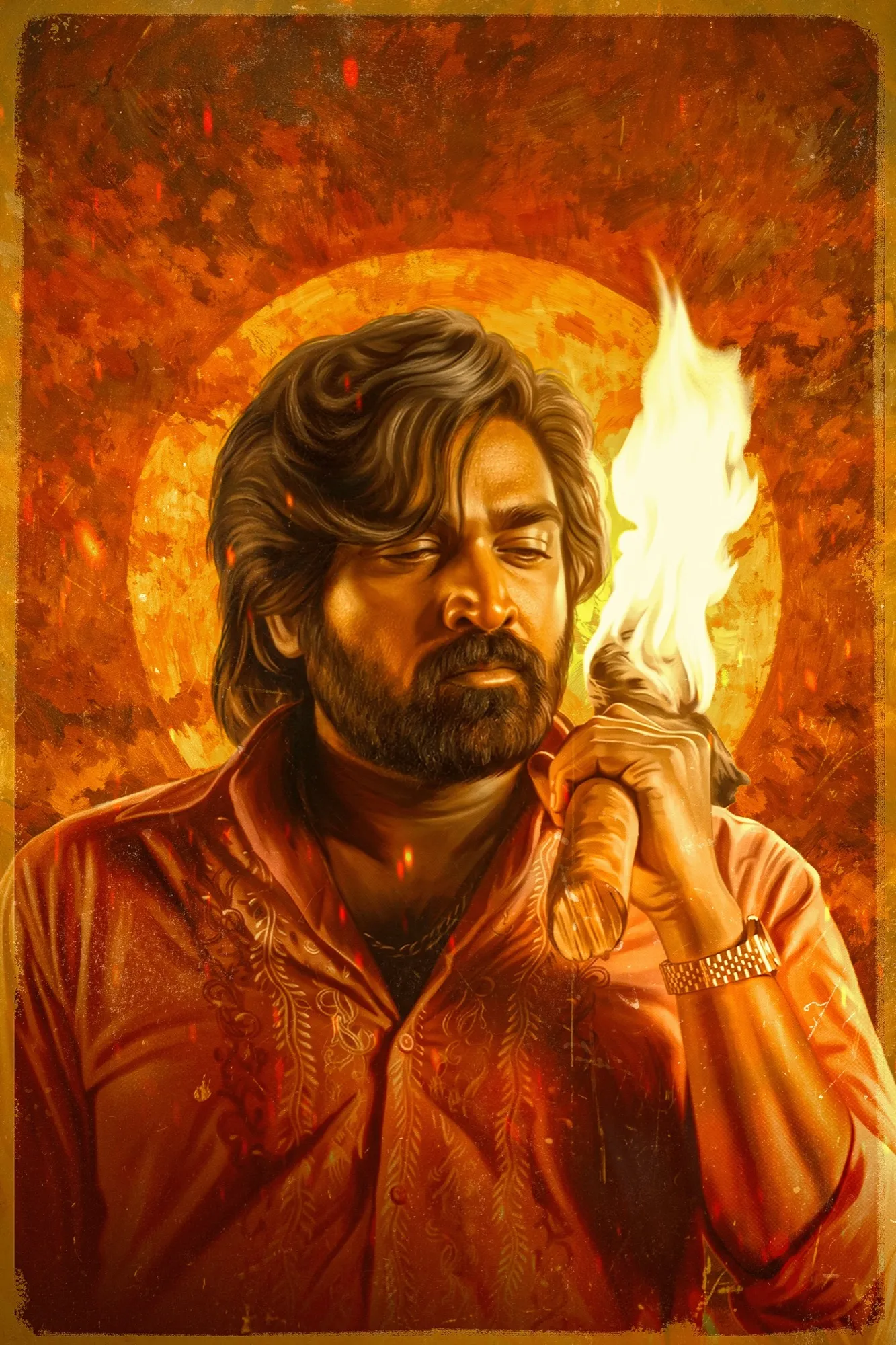
What lingers is how unheroic its idea of goodness is. Sabari stays frightened from start to finish and keeps going back to that door anyway. In a film full of men puffing out their chests, it is the bravest thing anyone does.
More onBaththa,Vijay Sethupathi,Balaji Tharaneetharan,Movie Review